News
Purple is a difficult colour. It shifts towards blue in shade, towards pink in warm light, and in the flat glare of a Nairobi noon it simply dies. Anyone who sets out to photograph jacarandas in Nairobi this October learns that quickly, usually after a morning of disappointing frames. The good news is that the city is generous with locations, the season gives you several weeks to get it right, and the craft is learnable. This guide covers the best places to shoot, the light that flatters the bloom, the lenses that help and the etiquette that keeps you welcome, with Karen, and Karen Plains Hotel on Karen Plains Road, as the quiet base from which to work.
The best places to photograph jacarandas in Nairobi
Each of these locations offers a different kind of picture. Shoot more than one and your set will have range.
- State House Road. The avenue shot: a long, tree-lined road with canopies meeting overhead. Best early on a Sunday when the traffic is thin. Use a telephoto from a safe position on the verge to compress the trees into a tunnel of colour.
- Nairobi Arboretum. The only place on this list where you can walk among the trees without worrying about cars. Paths, benches and open lawns give you foreground options, and the mix of species lets you set purple against unexpected greens. About 40 minutes from Karen, traffic depending; see our notes on reaching the Arboretum from Karen.
- Upper Hill. The contrast shot: glass towers rising from a lilac canopy. Find an elevated vantage point on a public road and let the buildings anchor the frame.
- Kilimani and Lavington. Residential streets where single, enormous trees overhang the road. Good for isolating one tree against the sky.
- City Park. Older, looser, more atmospheric, with the chance of monkeys in the frame.
- Karen's lanes. Karen Road, Bogani Road and the Ndege Road area are the quietest locations in the city and the easiest to walk at dawn. If you are staying at Karen Plains Hotel they are a few minutes away, which means you can shoot the first light and be back for breakfast before 10:30am.
Light: the single most important decision
Golden hour. The hour after sunrise, roughly 6:30 to 7:30am in October, gives warm, directional light that lifts the purple towards magenta and throws long shadows across the road. The hour before sunset does the same, though afternoon traffic makes it harder to work. Position yourself so the light rakes across the canopy rather than falling flat on it.
Backlighting. Shoot into the sun through the canopy and the flowers become translucent, glowing like stained glass. Expose for the highlights, let the trunk fall into silhouette, and shade the front of the lens with your hand to control flare.
Overcast. Do not pack up when the clouds roll in. Soft, even light after one of October's afternoon showers is the best light there is for jacaranda colour: no harsh shadows, saturated petals, wet tarmac reflecting purple. This is when the fallen carpet is at its most photogenic.
Midday. Avoid it. Top light flattens the canopy, bleaches the colour and leaves your frames looking grey. Use the middle of the day for giraffes, museums and lunch.
Shoot the first light from a base five minutes from Karen's best trees. Karen Plains Hotel offers clean ensuite rooms, fast Wi-Fi, free secure parking, 24/7 reception and easy access to Karen's malls, restaurants, safari routes and major attractions. Book directly for the smoothest experience, room requests, airport transfer support and quick WhatsApp assistance.
Lenses, angles and the fallen carpet
Wide-angle lenses, anything from 16 to 35mm on full frame, capture the sweep of an avenue or a whole tree against the sky. Get close to the trunk and point up for the classic canopy-from-below picture; include a slice of road or wall to give the eye a way in.
Telephoto lenses, 70mm and beyond, do two things well. They compress a line of trees so the canopies merge into a single mass of colour, and they let you isolate a branch, a gate, a passing figure in a bright kanga, from across the road without stepping into traffic. A longer lens also keeps you off private property.
Macro rewards patience. Each flower is a small trumpet, and after rain each one holds a bead of water. Fallen blossoms on a dark surface make simple, striking frames.
The carpet. Nairobians love the fallen flowers as much as the trees. Shoot low, at knee height or lower, so the ground fills the lower half of the frame and the tree recedes above. Early morning, before the first cars have scattered the petals, is the window. Red murram lanes in Karen are especially good because the earth and the purple sit so comfortably together.
For phone photographers, most of this still applies: shoot early or in overcast light, tap to expose for the flowers, and resist the saturation slider. The colour is already there.
Etiquette and safety
- Private property. Many of the finest trees stand in gardens. Photograph from the road, do not open or lean over gates, and if a guard asks you to move on, do so with a smile.
- Traffic. State House Road and the Kilimani roads are busy. Work from the verge, never from the carriageway, and do not stop a car where it blocks a lane or a junction. Hazard lights are not a permit.
- People. Ask before photographing anyone recognisable, especially children and security staff. Nairobians are generally relaxed about it if you ask first.
- Institutions. Government buildings, State House grounds and some embassies restrict photography. Keep the lens on the trees and the public road.
- Weather. The short rains arrive quickly. Carry a cloth and a bag for the camera, and watch your footing on wet petals, which are slippery.
Combining the trees with wildlife
October is also a strong month for wildlife photography. Nairobi National Park's main gate is about 20 to 30 minutes from Karen, the dry-season grass is short, and animals gather near water in the early morning. A long lens that served you on State House Road will serve you again at the Hippo Pools. Our photographer's October guide to Nairobi sets out how to balance the two, and the hotel's page for photography trips covers early starts and local movement.
A base that fits a photographer's hours
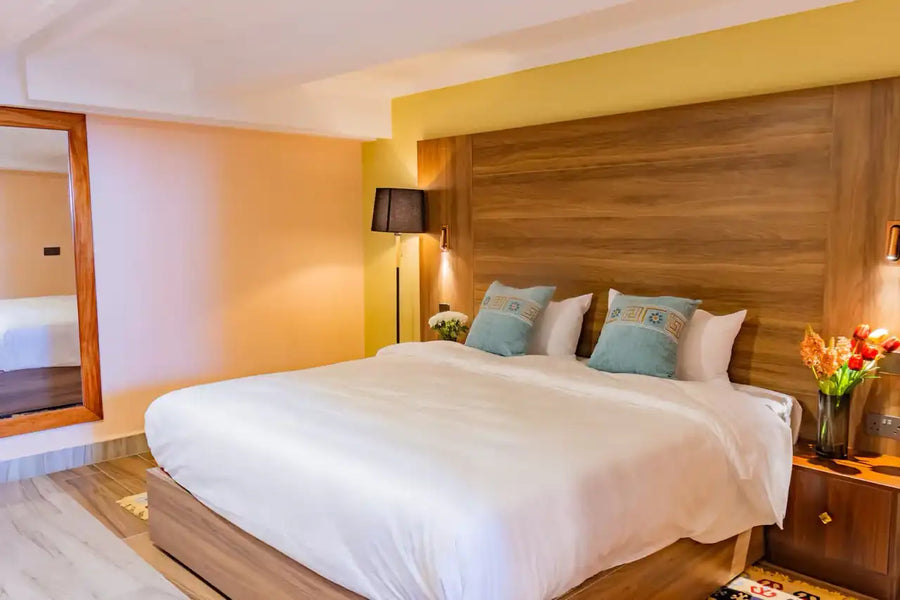
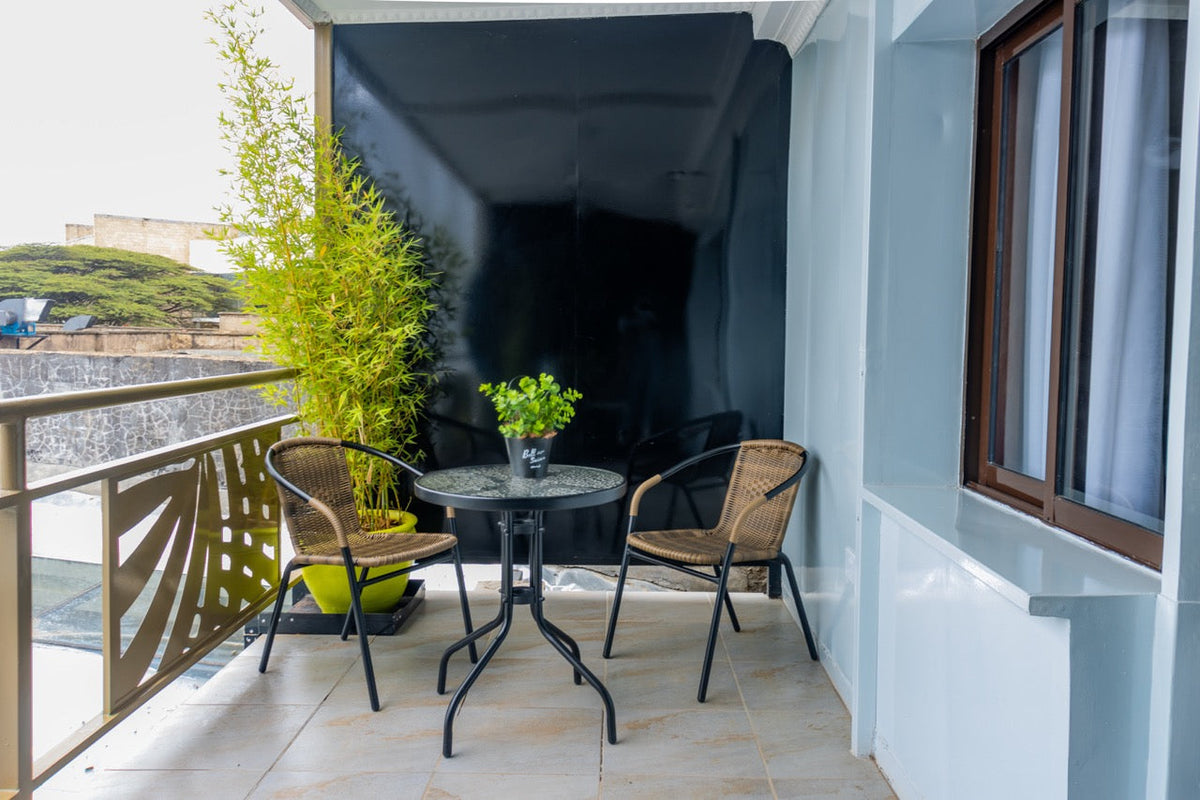
Photographers keep strange hours, and Karen Plains Hotel is set up for them. Reception is open 24/7 for a 6:00am departure, there is free secure parking for a car full of gear, fast Wi-Fi for backing up cards and a work desk in every room for editing. A backup generator covers the rooms and the Wi-Fi. Rooms are clean and ensuite with comfortable beds and hot showers, and some have a balcony onto trees for reviewing the morning's frames in natural light. Breakfast runs from 7:00 to 10:30am, laundry is available, and airport transfers from JKIA or Wilson can be arranged on request. Start with Plan Your Stay or message the team on WhatsApp with your dates.
Flying into Nairobi this October? Karen Plains Hotel can help arrange airport transfers from JKIA or Wilson Airport on request. Send your flight details on WhatsApp before arrival so the team can guide you on timing, pickup and check-in.
Frequently asked questions: photographing Nairobi's jacarandas
What is the best time of day to photograph jacarandas in Nairobi?
Early morning, from about 6:30 to 8:30am, and the soft light of an overcast late afternoon. Both flatter the purple and avoid the flat, bleached look of midday sun. Sundays add the advantage of light traffic.
Which lens is best for jacaranda photography?
A wide-angle lens captures whole trees and avenues, while a telephoto compresses lines of trees and isolates details from a safe distance. Many photographers carry both; a phone with a clean lens and careful exposure also does well in good light.
Where can I photograph jacarandas in Nairobi without traffic?
The Nairobi Arboretum lets you walk among the trees on paths, and Karen's lanes near Karen Plains Hotel are quiet at dawn. State House Road and Kilimani are more dramatic but require care at the roadside.
Can I photograph jacarandas in private gardens?
Only from the public road. Many of Nairobi's best trees are in private compounds, so shoot from outside, do not open gates, and move on politely if asked. A longer lens makes this easy.
How do I photograph the fallen jacaranda flowers?
Go early before cars scatter the petals, get the camera low to the ground, and shoot after rain if you can, when the colours deepen and surfaces reflect. Red murram lanes in Karen make a particularly good backdrop.
The trees will do their part in late October. Yours is to be out early, to welcome the clouds, to stay on the public side of the gate and to look down as often as up. Base yourself in Karen, and the best light of the day is a short walk from your door.
Make Karen your October darkroom. Book your nights directly with Karen Plains Hotel, or message the team on WhatsApp about early departures, parking and local drivers.