News
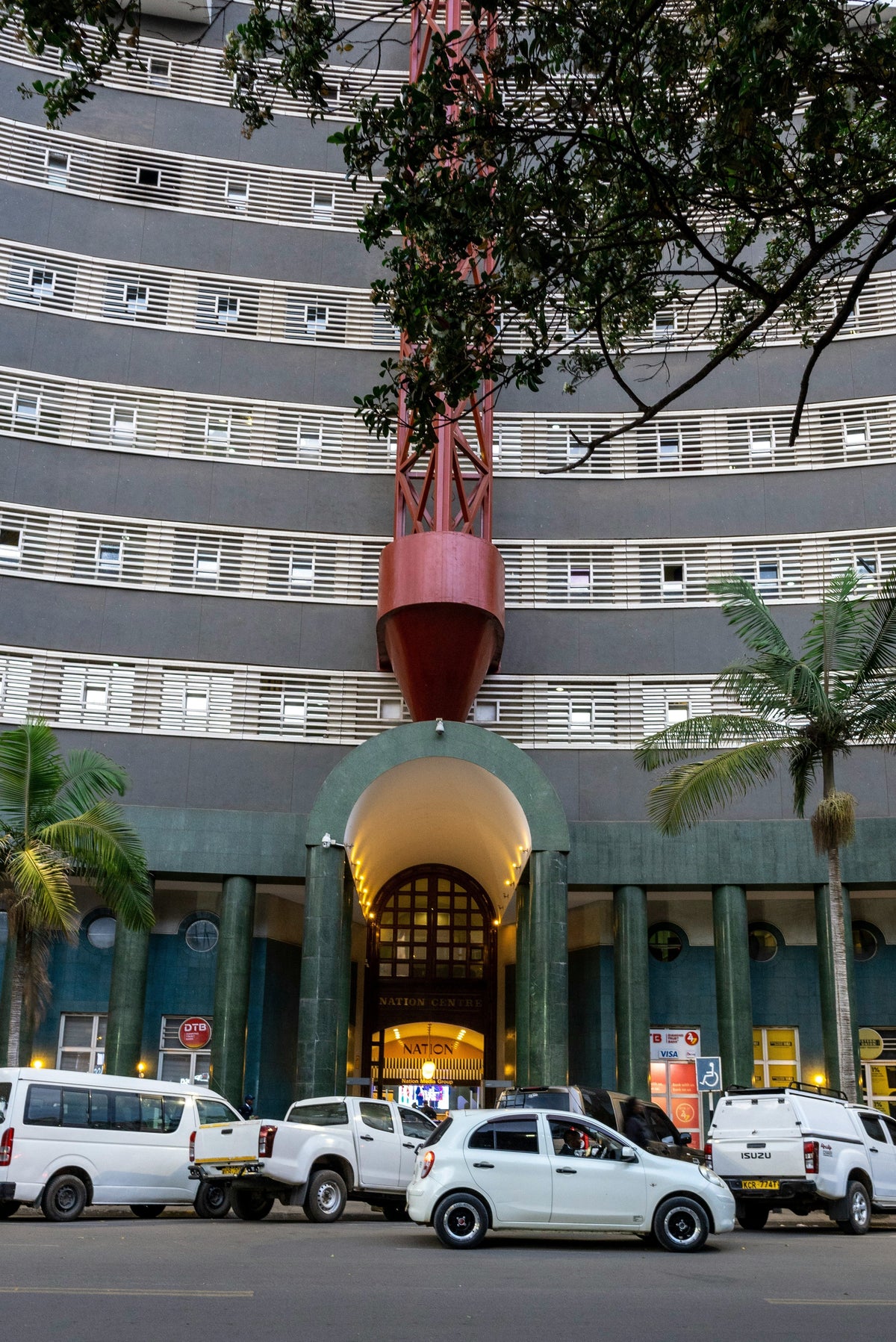
If you really want to understand Nairobi, don’t start with the headlines or the hashtags.
Start by looking up.
The city’s story is written in concrete cylinders, Brutalist plazas, glass towers that catch the late-afternoon sun, and cathedrals that glow quietly in the middle of downtown chaos. Behind each of these moments is a person (or a small team of very stubborn people) who believed that Nairobi could look and feel a certain way — and then drew it into existence.
This is not a complete history, and it’s not a list of “top 5 tallest buildings”. It’s a walk through five architects whose work, influence and leadership have shaped how modern Nairobi looks, feels and imagines itself — from post-independence confidence to today’s restless, vertical city.
1. David Mutiso – the modernist heartbeat of independence

If Nairobi had a single architectural icon for its post-independence dreams, it would be the Kenyatta International Convention Centre (KICC). Completed in the early 1970s, the cylindrical tower and its conical plenary hall still sit at the emotional centre of the CBD, a kind of concrete lighthouse for the city.
Officially, KICC was designed by Norwegian architect Karl Henrik Nøstvik alongside Kenyan architect David Mutiso. Mutiso wasn’t just a collaborator — he was Kenya’s first African Chief Architect at the Ministry of Public Works, a role that put him in the room for some of the most consequential design decisions of the era. BUILDesign+1
The story goes that the building’s famous form — that rising cylinder with petal-like ribs — was inspired by something as ordinary as a donkey drinking water, or by a traditional granary, depending on who you ask. Either way, the result was pure Nairobi: practical, sculptural, and impossible to ignore.
Mutiso’s legacy isn’t just one building. As Chief Architect, he was involved in multiple public projects at a time when Kenya was defining what a newly independent capital should look like — modern but rooted, ambitious but not derivative. BUILDesign
Today, when you stand on the KICC rooftop and look out over the city — from Parliament to Railways, from Upper Hill’s towers to the thinning edges of the city — you’re literally seeing Nairobi from inside Mutiso’s imagination.

2. Dorothy Hughes – modern faith in the middle of town
Long before “starchitects” and Instagrammable facades, Eugenie Dorothy Hughes was quietly doing something radical: being the first East African woman to own and run an architectural practice, and reshaping Nairobi’s spiritual centre while she was at it.
Hughes is best known for the design of the Cathedral of the Holy Family (often called Holy Family Basilica), the Catholic cathedral in downtown Nairobi. Its modern lines and stained glass sit just a short walk away from KICC and Parliament — a trio of buildings that, together, map out power, people and prayer in the city centre.
In a city that’s always negotiating between the colonial past and African futures, Hughes’s work sits in an interesting middle ground. She was a European-born architect who chose to live and work in Kenya, designing not just buildings but also social infrastructure: she founded the Kenyan Council of Social Services and was heavily involved in disability sport.
Walk past the Basilica on a weekday afternoon and you’ll see office workers slipping into mass, street kids sheltering under the eaves, and boda riders leaning against its walls while they wait for the next trip. That mix of sacred and everyday is very Nairobi — and Hughes helped draw that space into existence.
3. Triad Architects – the firm that built the State (and more)
Some architects shape a city through a single masterpiece. Others do it by sheer persistence over decades. Triad Architects belongs to the second group.
Founded in the early 1960s, Triad has been “at the forefront of the architectural profession in Kenya and the East Africa region” for over half a century, working on everything from civic buildings to corporate offices to large-scale planning. Triad+1
At the very beginning of independence, two of Triad’s key figures — Amyas Connell and Thornley Dyer — were asked to design new legislative buildings for the British administration. After independence, these became the New Parliament Buildings of Kenya, anchoring the political core of Nairobi beside the older colonial structures. Triad+1
Since then, Triad has had a hand in shaping much of Nairobi’s institutional face: banks, ministries, offices, campuses and more. Their work tracks the city’s transition from low-rise government town to growing regional capital, and later into a financial hub with new business districts like Upper Hill.
Where Mutiso and Nøstvik gave Nairobi its modernist icon in KICC, Triad sketched in the supporting cast — the places where laws are debated, deals are signed and everyday bureaucracy plays out. For most Nairobians, even if you don’t know the firm by name, you’ve probably walked through or past their spaces more times than you can count.

4. Julius Talaam – the vertical ambitions of Upper Hill & Westlands
If KICC symbolised a young nation looking outward, the towers of Upper Hill and Westlands are the physical expression of a later chapter: Nairobi as a pan-African financial and business hub.
Architect Julius Talaam, a senior architect at Triad and principal at Laam Architects, is one of the key figures behind this phase. He led the design of UAP Old Mutual Tower in Upper Hill, once the tallest building in Kenya, and contributed to the design of the Global Trade Centre (GTC) in Westlands. Kenyans
UAP Tower’s 33 storeys rise above the old low-slung offices and residential plots of Upper Hill, marking the neighbourhood’s transformation into a high-density business district. The project reportedly cost around KSh 5 billion and completed in 2015, signalling just how serious the city was about new-grade office stock and skyline branding. Kenyans
GTC, with its cluster of mixed-use towers along Waiyaki Way, pushes that ambition even further, bringing luxury residences, hotel rooms and retail into the same vertical ecosystem. Kenyans
Talaam’s work belongs to the era of Nairobi where floor area, grade-A office space, and international tenants share the stage with questions about infrastructure, transport and who gets to enjoy the view. Love or hate the glass-and-steel aesthetic, these towers have redefined what “modern Nairobi” looks like on postcards and drone shots — and they are very much part of his legacy.
5. Emma Miloyo – designing space and opening doors

If the first generation of post-independence architects were busy drawing the new state, today’s architects are grappling with a different set of questions: sprawl, speculation, inequality, sustainability, tech, and who gets to belong in the built environment.
Emma Miloyo sits right at that crossroads.
A Nairobi-born architect, she co-founded the firm Design Source in 2007, working on commercial, residential and mixed-use projects across Kenya, and later became the first woman president of the Architectural Association of Kenya (AAK) in 2017. Wikipedia+1
Her influence runs on twin tracks: practice and advocacy. On the practice side, she’s been involved in shaping real estate projects and advising on large-scale initiatives such as Konza Technopolis, where she served as a founding board member — a key piece of the “Silicon Savannah” narrative that has rebranded parts of Kenya’s urban future. Wikipedia
On the advocacy side, Miloyo has consistently pushed for more women in architecture and real estate, mentoring girls through education trusts and helping build platforms like Women in Real Estate (WIRE). Wikipedia+2uia-architectes.org+2
In a city where many people still assume “mzee wa site” is always a man, her leadership has helped crack open doors — not just to boardrooms, but also to how Nairobi imagines who gets to design its next chapter.
Reading the city through its buildings
Taken together, these five architects don’t give you a neat, unified story. Instead, they sketch out overlapping eras and energies:
Mutiso and Nøstvik’s KICC: the optimism and performance of a new nation. ArchDaily
Hughes’s Basilica: faith reframed in modern materials, right in the city’s busiest core. Wikipedia
Triad: the quiet, steady work of drawing the state and its institutions into stone, glass and concrete. Triad+1
Talaam: the vertical rush of Nairobi’s late-capitalist skyline. Kenyans
Miloyo: a reminder that who designs the city matters as much as what gets built. uia-architectes.org+1
Walk through Nairobi with them in mind and the city stops being just “traffic and towers”. It becomes a layered archive of decisions, arguments, compromises and quiet acts of bravery.
You notice how the curve of KICC’s tower answers the sharp edges of Upper Hill’s glass. How prayers in Holy Family spill out into the same streets that funnel protesters to Parliament. How new estates echo old ideas about comfort and status. How a generation of younger architects — many of them women — are now sketching Nairobi’s next version with bolder questions about climate, equity and memory.
If you want to see this Nairobi for yourself
The best way to understand all this is not from Google Images, but on foot (or in a very patient Uber). Spend a morning tracing a line from Holy Family Basilica to Parliament to KICC; an afternoon in Upper Hill and Westlands; an evening in the quieter, leafier edges of the city where new practices are experimenting with sustainability and scale.
And when you need a base that’s calm, green and still plugged into the city’s creative current, the leafy edges of Karen make a pretty good vantage point.
From there, modern Nairobi is close enough to reach — and just far enough away that you can come back at the end of the day, exhale, and let everything you’ve seen settle into place.