News
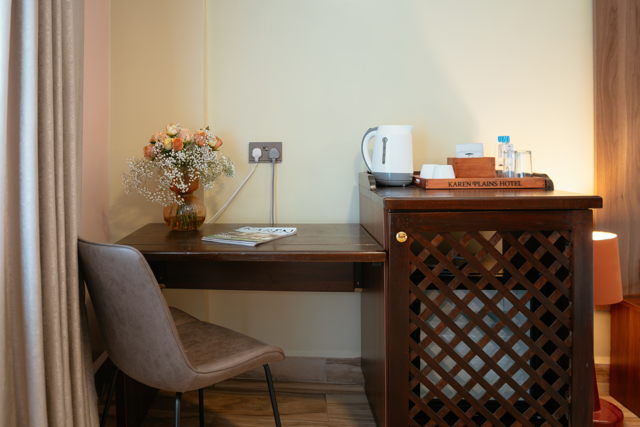
Ask most travelers what they want from a hotel and the answers tend toward the aspirational. Good design. A comfortable bed. A nice bathroom. Perhaps a pool. These things matter, and no one is pretending otherwise. But spend enough time staying in hotels across African cities and a different hierarchy of needs becomes very clear, very quickly. The things that actually determine whether a stay is good or bad are rarely the things that appear in the marketing photographs.
In Nairobi, and in most East African cities, the three things that most reliably separate a genuinely good hotel stay from a frustrating one are power, wifi, and water. Get these right and guests forgive a lot. Get any of them wrong and no amount of good design or friendly service fully compensates. This is not a modest observation. It is the honest foundation on which good hospitality in Nairobi is built.
Power: The Thing That Makes Everything Else Possible
Kenya has made significant progress on electricity infrastructure over the past decade. The national grid covers more of the country than ever before, and outages in Nairobi are less frequent than they were five years ago. But load shedding, localized faults, and the occasional prolonged outage remain real features of the Nairobi operating environment. For a hotel guest who is on a tight schedule, working remotely, preparing for an early safari departure, or simply trying to charge devices before a long day, a power outage at the wrong moment is not a minor inconvenience. It is a material disruption to the purpose of their stay.
A generator backup system sounds simple. In practice, running one reliably requires investment, maintenance, fuel management, and operational discipline. Hotels that cut corners on generator capacity or maintenance tend to run partial backup systems that cover some areas of the property but not others, or that fail precisely when demand is highest. Guests notice immediately, and the memory of a dark room, a cold shower because the water heating system has no power, or a failed laptop charge before a 6am Wilson Airport departure, does not fade quickly.
Karen Plains Hotel runs 24-hour generator backup across the full property. This is not a marketing claim. It is an operational commitment that the team treats as non-negotiable, because the alternative is a category of guest experience failure that no other element of the stay can repair. When guests ask about power backup during the booking process, and many do, the honest answer is that it has never been a meaningful problem at the hotel because the infrastructure and the maintenance discipline are both in place.
The IFC's research on hotel infrastructure in Sub-Saharan Africa consistently identifies reliable power as the single most important operational input after the physical building itself. It is upstream of everything: food preparation, room servicing, communications, security, water heating. A hotel without reliable power is not operating at a level that justifies calling itself reliable. A hotel with reliable power has cleared the most fundamental hurdle in the Nairobi operating environment.
WiFi: The Infrastructure of Modern Work and Travel
Ten years ago, wifi in a hotel was a convenience. Today it is infrastructure in the same category as running water. The share of hotel guests who are doing some form of work during their stay, whether a business traveler managing a project, an NGO professional staying in touch with a field team, a remote worker on a long assignment, or a family trying to navigate an unfamiliar city using online maps and booking platforms, has reached a point where unreliable wifi is not an acceptable feature of any hotel that charges professional rates.
The wifi problem in Nairobi hotels takes several forms. The most common is insufficient bandwidth for the number of guests connected simultaneously. A hotel with 20 rooms connecting to a single consumer-grade internet line will deliver a consistently poor wifi experience to anyone who needs to do more than check messages. Video calls stutter. File uploads fail. Pages load slowly. Guests work around it by using their mobile data, which is expensive and unreliable for sustained work, and they remember the hotel as having bad wifi.
The second form is dead zones. A hotel where wifi works in the lobby but not in the rooms, or works on one floor but not another, is a hotel that has treated wifi as an afterthought rather than an infrastructure investment. For a guest who needs to be on a video call from their room at 7am before a safari departure, this is a serious problem that no amount of friendly check-in conversation resolves.
Karen Plains Hotel uses fibre broadband with sufficient capacity for the property and has access points positioned to cover all guest areas. This again sounds simple. In practice it requires the right infrastructure investment and ongoing management. When guests test the connection on arrival, which many do immediately, the experience should be consistent and reassuring. For business travelers, NGO teams, and remote workers, reliable wifi is often the primary reason they return to a hotel rather than trying somewhere new. It is the infrastructure that makes the rest of the stay productive.
For guests who work remotely from Nairobi, read our guides on Nairobi for business travelers and long-stay accommodation in Nairobi for a fuller picture of what to look for in a work-friendly hotel.
Water: The Basic That Is Not Always Basic
Water reliability is the third pillar, and it is the one that guests are least likely to think about before arrival but most likely to remember if it goes wrong. Nairobi's water supply has improved significantly but remains variable across different parts of the city and at different times of year. Hotels without water storage infrastructure are exposed to supply interruptions that can last hours or, in worse cases, days.
The operational discipline required to maintain consistent water availability involves storage tanks of appropriate capacity, regular maintenance of the supply system, and the management attention to treat water as a priority rather than an assumption. Hotels that run lean on water infrastructure tend to experience problems during dry periods or when the municipal supply is disrupted. Guests experience this as cold showers, low water pressure, or, in the worst cases, no water at all. These failures are remembered.
Hot water is a specific sub-issue worth addressing. Many budget and mid-range hotels in Nairobi run solar water heating systems that work well during sunny days but deliver cold water during overcast periods or when demand exceeds what the system has managed to heat. Guests arriving after a long international flight who want a hot shower at 11pm are not asking for luxury. They are asking for a basic that the hotel needs to be able to deliver regardless of what the weather has done that day.
At Karen Plains Hotel, water storage and hot water availability are managed as operational priorities. Guests should not need to think about water. When it works, it is invisible. When it fails, it is the only thing anyone thinks about.
Why This Matters More Than Design
The hospitality industry, in its marketing orientation, tends to emphasize design, cuisine, and experiential amenities. These things are genuinely valuable. A beautifully designed room is a more pleasant place to spend time than a functional but unattractive one. Good food makes a meaningful difference to the quality of a stay. Thoughtful amenities communicate that the hotel has paid attention to what guests actually need.
But the hierarchy matters. Design is irrelevant if the power goes out. Good food cannot be prepared if the kitchen has no reliable electricity or water. Thoughtful amenities do not compensate for lying awake at 3am because the generator has failed and the room is hot and dark. The fundamentals are primary. Everything else is secondary.
This is not an argument against investing in design or food or amenities. It is an argument for getting the sequence right. A hotel that has invested heavily in its aesthetic but runs an unreliable generator is a hotel with misaligned priorities. A hotel that has reliable power, water, and wifi but modest design is a hotel that has made the right choices for its guests, even if it photographs less dramatically.
The IFC's research on the missing middle in African hospitality, the established independent hotels that sit between micro-guesthouses and large international chains, consistently finds that the most successful properties in this category compete on reliability rather than luxury. They attract repeat business from business travelers, NGO teams, diaspora visitors, and safari travelers because they deliver consistently on the fundamentals, every stay, without the variability that makes planning around a hotel stressful.
Read our article on why hospitality is economic infrastructure in Nairobi for more on the role that independent hotels play in the wider economy.
What Reliable Basics Actually Enable
When power, wifi, and water are working reliably, something important happens: guests stop thinking about the hotel and start thinking about why they came to Nairobi. The business traveler focuses on their meetings. The safari visitor plans their game drive. The diaspora returnee has the mental space to engage fully with the family visit they have been looking forward to. The remote worker gets through their morning calls without the low-level anxiety of wondering whether the connection will hold.
This is what reliable infrastructure enables. It clears the operational noise from the guest experience and allows the actual purpose of the stay to take centre stage. For an independent hotel, delivering this kind of background reliability is the most important competitive advantage available. It is not glamorous. It does not photograph well. But it is what guests come back for, and what they tell others about.
At Karen Plains Hotel, reliable basics are treated as the foundation of everything else. Daily breakfast is included because starting the day without having to organise or pay for a meal is a small but consistent positive. The team is available because having someone to contact when something needs to happen, a transfer arranged, a recommendation made, a question answered, is genuinely useful. And power, wifi, and water are maintained because without them, nothing else the hotel offers has any meaning.
Book a Stay That Delivers on the Basics
Karen Plains Hotel is a boutique hotel in Karen, Nairobi. We offer comfortable rooms with daily breakfast, fast fibre wifi, 24-hour generator backup, and consistent water availability. We are 10 minutes from Nairobi National Park, 15 minutes from the Giraffe Centre, and 10 minutes from Wilson Airport for Masai Mara safari connections.
For business travelers and long-stay guests, read our guides on Nairobi for business travelers and long-stay in Nairobi. For safari travelers, read our pre-safari first night guide and our guide on Nairobi to Masai Mara: road vs. flight.
Book direct here for the best available rate, or WhatsApp us on +254 796 989 928.